The oncology pharmaceutical segment is one of the most specialized areas of the healthcare industry. With increasing demand for cancer medicines, healthcare professionals, distributors, and pharmaceutical entrepreneurs are looking for reliable partners that can provide quality oncology products, regulatory support, consistent supply, and competitive business opportunities.
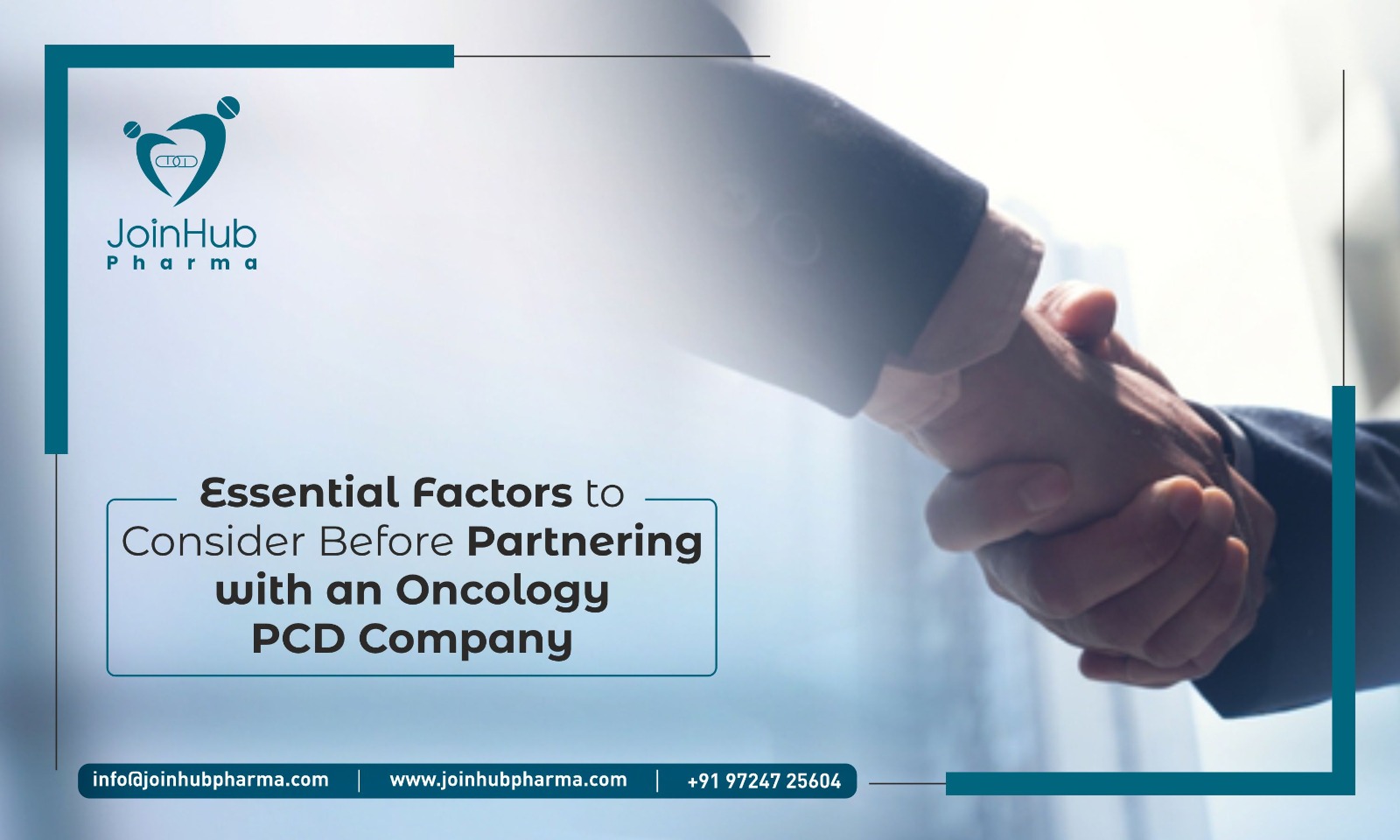
For entrepreneurs planning to enter or expand within this segment, partnering with an oncology PCD company can be an attractive business model. A Pharma PCD (Propaganda Cum Distribution) partnership allows pharmaceutical professionals, distributors, and business owners to market and distribute medicines within an assigned territory, often with support from the manufacturing or pharmaceutical company.
However, selecting the right oncology PCD partner requires more than simply comparing product prices or promotional offers. Oncology medicines require strict quality standards, appropriate manufacturing practices, regulatory compliance, reliable supply chains, and responsible product handling.
Before signing an agreement, prospective partners should carefully evaluate the company’s manufacturing capabilities, product portfolio, certifications, pricing structure, monopoly rights, business support, and reputation.
In this guide, we explore the essential factors to consider before partnering with an oncology PCD company and how making the right choice can help create a sustainable pharmaceutical distribution business.
What Is an Oncology PCD Company?
An oncology PCD company is a pharmaceutical company involved in providing oncology medicines and related pharmaceutical products to distributors, marketing associates, and PCD franchise partners.
Under an oncology PCD franchise model, the parent pharmaceutical company generally provides products, promotional materials, product information, and business support, while the franchise partner focuses on marketing, distribution, and developing the assigned territory.
Depending on the company and agreement, an oncology PCD franchise may offer:
- Oncology tablets and capsules
- Anticancer medicines
- Chemotherapy-related products
- Injectable oncology formulations
- Supportive care medicines
- Hormonal therapies
- Oncology nutraceuticals and supplements
- Other products used in cancer treatment and supportive care
Because oncology is a highly specialized therapeutic segment, selecting an experienced and quality-focused pharmaceutical partner is particularly important.
1. Evaluate the Company’s Manufacturing Standards
Manufacturing quality should be one of the first factors to evaluate when selecting an oncology PCD pharma company.
Oncology medicines require controlled manufacturing processes, appropriate quality systems, validated procedures, and stringent testing. A potential partner should have access to manufacturing facilities that follow recognized Good Manufacturing Practices (GMP).
Ask the company about:
- Manufacturing facility standards
- GMP compliance
- Quality control procedures
- Quality assurance systems
- Batch testing procedures
- Stability testing
- Raw material sourcing
- Packaging standards
- Storage and handling procedures
A strong manufacturing foundation can help ensure consistency in product quality and supply.
2. Check WHO-GMP and Other Relevant Certifications
Certifications can provide important information about a pharmaceutical company’s quality-management practices.
When evaluating an oncology PCD company in India, check whether the company or its manufacturing partners have relevant certifications and approvals. Depending on the products and target market, this may include GMP or WHO-GMP-related compliance and applicable regulatory approvals.
However, businesses should not evaluate a company solely on the presence of a certificate. It is equally important to verify the validity and relevance of the certification and understand which manufacturing facility and products it covers.
A transparent pharmaceutical company should be willing to provide appropriate documentation for business verification.
3. Examine the Oncology Product Portfolio
A broad and relevant oncology product range can make it easier for a PCD partner to address the requirements of different healthcare professionals and distribution channels.
Before entering into a partnership, review the company’s product portfolio carefully.
Consider:
- Number of oncology products
- Dosage forms available
- Therapeutic categories covered
- Strengths and formulations
- Product availability
- Packaging options
- New product development
- Product documentation
A company offering a well-structured oncology portfolio may provide greater opportunities for portfolio expansion as the business develops.
At the same time, product quantity should not be the only consideration. Quality, regulatory status, demand, availability, and suitability for the target market are equally important.
4. Verify Product Quality and Documentation
Product quality is particularly important in oncology because these medicines are used in specialized treatment settings.
Before partnering with an oncology pharma company, ask about product documentation and quality-control processes. Depending on the product, relevant documentation may include certificates of analysis, product specifications, manufacturing information, regulatory documentation, and packaging details.
The company should have a systematic approach to:
- Raw material testing
- Finished product testing
- Batch release
- Quality assurance
- Product traceability
- Complaint handling
- Product recall procedures
Reliable documentation also helps distributors and business partners respond more effectively to regulatory and customer requirements.
5. Compare Pricing and Profit Margins
Commercial viability is another major consideration when selecting an oncology PCD franchise company.
Competitive pricing allows distributors and marketing partners to develop sustainable margins while keeping products commercially attractive.
Do not compare companies based only on the lowest quoted price. Instead, evaluate the overall value offered.
Compare:
- Product price
- Minimum order quantity
- Available discounts
- Distributor margins
- Promotional support
- Freight and logistics costs
- Payment terms
- Credit policies, where applicable
- Territory-specific commercial conditions
A slightly higher product price may still represent better value if the company provides stronger quality, dependable supply, better documentation, and comprehensive business support.
6. Understand Monopoly Rights and Territory Policy
One of the most important aspects of a PCD partnership is territory protection.
Many pharmaceutical companies provide monopoly or exclusive marketing rights to PCD partners for specific products and geographical territories, subject to the company’s terms and conditions.
Before signing an agreement, clearly understand:
- Which territory is assigned
- Whether the territory is exclusive
- Which products are covered
- Minimum purchase requirements
- Conditions for continuing exclusivity
- Whether the company can appoint another partner in the same territory
- Agreement duration
- Renewal conditions
A clearly documented territory policy can help prevent future conflicts and provide greater confidence when investing in market development.
7. Assess the Company’s Supply Chain and Product Availability
Consistent product availability is essential for pharmaceutical distribution.
Even a strong oncology product portfolio can become difficult to market if products are frequently out of stock or deliveries are unpredictable.
Ask potential partners about:
- Production capacity
- Inventory management
- Average dispatch timelines
- Stock availability
- Order processing
- Logistics partnerships
- Handling of urgent requirements
- Back-order procedures
A reliable oncology medicine supplier should have a systematic supply-chain process capable of supporting its PCD partners.
8. Look at Packaging and Product Presentation
Packaging plays an important role in pharmaceutical product identification, protection, storage, and professional presentation.
Evaluate whether the company’s oncology products have clear and compliant labeling, appropriate packaging materials, batch information, manufacturing details, expiry information, storage instructions, and other required information.
Professional packaging can also strengthen the credibility of products in the market.
9. Evaluate Promotional and Marketing Support
A good oncology PCD company should ideally provide more than pharmaceutical products. Marketing support can help business partners introduce products and communicate product information effectively.
Depending on the company, promotional support may include:
- Product visual aids
- Product cards
- Promotional literature
- Product lists
- Doctor-oriented materials
- Digital marketing resources
- Company presentations
- Product training
- Business guidance
Ask what promotional materials are available and whether they are supplied regularly.
10. Check the Company’s Reputation and Experience
Experience can be an important indicator when selecting a pharmaceutical partner.
Research the company’s presence in the oncology pharmaceutical market and assess its reputation among distributors and business partners.
Consider:
- Years of industry experience
- Oncology specialization
- Manufacturing relationships
- Product quality history
- Customer feedback
- Distribution network
- Export experience
- Regulatory capabilities
- Responsiveness to partners
Online reviews can provide initial insights, but business decisions should be based on multiple sources of verification rather than testimonials alone.
11. Evaluate Regulatory and Compliance Support
Oncology medicines are subject to pharmaceutical regulations, which may vary depending on the country and market.
If you plan to distribute products domestically or internationally, determine whether your prospective partner can provide appropriate regulatory documentation and product information.
For export-oriented businesses, additional considerations may include:
- Product registration requirements
- Import regulations
- Country-specific documentation
- Labeling requirements
- Certificates required by authorities
- Product dossiers
- Shipping and storage requirements
A partner with experience in regulatory compliance can make market expansion more structured and efficient.
12. Consider Research and New Product Development
The oncology pharmaceutical market continues to evolve with new therapies, formulations, and treatment approaches.
An oncology pharma company that actively expands and updates its product portfolio may offer better long-term opportunities to its business partners.
Ask whether the company has plans for:
- New oncology formulations
- New strengths and dosage forms
- Generic oncology products
- Supportive care medicines
- Specialty pharmaceutical products
- Product portfolio expansion
A future-focused partner can help distributors remain competitive as market requirements change.
13. Review the Business Agreement Carefully
Before finalizing an oncology PCD partnership, read the agreement carefully.
Important areas to review include:
- Territory rights
- Product list
- Pricing
- Minimum order quantities
- Payment terms
- Delivery terms
- Promotional support
- Product replacement policies
- Quality-related responsibilities
- Agreement duration
- Renewal terms
- Termination conditions
If necessary, seek professional legal or commercial advice before signing.
14. Evaluate Customer and Partner Support
Responsive communication can make a significant difference in a long-term pharmaceutical partnership.
Before joining, observe how quickly the oncology pharmaceutical company responds to inquiries and whether its representatives provide clear answers.
A dependable partner should ideally provide assistance with:
- Product inquiries
- Orders
- Documentation
- Dispatch updates
- Product availability
- Quality complaints
- Business queries
- Regulatory information
Good communication can help minimize delays and improve the overall working relationship.
15. Consider Long-Term Business Potential
Choosing an oncology PCD company should be viewed as a long-term business decision rather than a short-term purchasing arrangement.
Instead of asking only, “How much margin will I receive?”, consider the broader potential:
Product quality + demand + territory + supply reliability + pricing + support + compliance = stronger long-term business potential.
A reliable pharmaceutical partner can help you gradually establish a strong presence in your target market.
Why Choosing the Right Oncology PCD Partner Matters
The right partnership can provide several advantages for pharmaceutical entrepreneurs and distributors.
These may include:
Access to Specialized Oncology Products
A specialized partner can provide access to a focused portfolio of oncology medicines and supportive-care products.
Established Manufacturing Support
Working with an experienced pharmaceutical company such as JoinHub Pharma can provide access to established manufacturing and quality systems.
Better Market Opportunities
A well-planned oncology product portfolio can help business partners target appropriate healthcare and distribution channels.
Marketing Assistance
Promotional materials and product information can reduce the effort required to build a product portfolio.
Potential for Territory Development
Clear territory policies can allow partners to concentrate their marketing efforts within a defined geographical market.
Long-Term Partnership Opportunities
A transparent and reliable company can become a long-term business partner rather than simply a product supplier.
Questions to Ask Before Choosing an Oncology PCD Company
Before finalizing your partnership, ask the following questions:
- What oncology products does the company currently offer?
- Where are the products manufactured?
- What quality certifications are available?
- Can the company provide relevant product documentation?
- What are the minimum order requirements?
- What pricing and margin structure is available?
- Is monopoly territory available?
- What are the terms for maintaining territory rights?
- How quickly are orders dispatched?
- What promotional materials are provided?
- Does the company support product registration or regulatory documentation?
- What happens if a product is unavailable?
- What is the complaint-handling procedure?
- Are new oncology products added regularly?
- What are the terms and conditions of the PCD agreement?
Getting clear answers to these questions can help reduce business risks and support better decision-making.
Common Mistakes to Avoid When Choosing an Oncology PCD Partner
Some businesses focus heavily on price and overlook other important factors. This can create challenges later.
Avoid selecting a company solely because it offers:
- Extremely low prices
- Very high advertised margins
- A large but poorly documented product list
- Unverified certifications
- Unclear territory policies
- Unrealistic business promises
Instead, prioritize quality, regulatory compliance, product availability, transparent commercial terms, manufacturing standards, and long-term support.
Why JoinHub Pharma Can Be Considered for Oncology PCD Partnerships
For businesses exploring an oncology PCD opportunity, JoinHub Pharma focuses on providing pharmaceutical products and business partnership opportunities designed around quality, reliability, and market requirements. Contact JoinHub Pharma today at info@joinhubpharma.com to discuss the requirement.
Potential partners should evaluate the available oncology portfolio, product documentation, commercial terms, territory availability, supply capabilities, and support offered before entering into a partnership.
The objective should be to create a professional and sustainable relationship where both the pharmaceutical company and its PCD partners can work toward long-term market development.
Conclusion
Selecting the right oncology PCD company is an important decision for anyone planning to establish or expand a pharmaceutical distribution business in the oncology segment. The right partner should offer more than competitive pricing. Manufacturing standards, product quality, regulatory compliance, portfolio strength, supply reliability, territory rights, promotional support, and transparent business terms all play an important role.
Before entering into an oncology PCD franchise partnership, conduct proper due diligence and verify the company’s credentials, product documentation, manufacturing arrangements, commercial policies, and support systems.
A carefully selected oncology PCD pharma company can provide the foundation for a reliable product portfolio and long-term business development. By focusing on quality, compliance, transparency, and sustainable market opportunities, pharmaceutical entrepreneurs can make more informed partnership decisions.
Frequently Asked Questions (FAQs)
1. What is an oncology PCD company?
An oncology PCD company is a pharmaceutical business that provides oncology medicines and related products to marketing and distribution partners under a PCD franchise model. Partners generally market and distribute products within an assigned territory according to the company’s terms.
2. How do I choose the best oncology PCD company?
Look for a company with appropriate manufacturing standards, quality certifications, a relevant oncology product portfolio, reliable supply, transparent pricing, territory policies, regulatory documentation, promotional support, and a strong reputation.
3. What should I check before taking an oncology PCD franchise?
You should check the company’s product quality, manufacturing standards, certifications, product documentation, pricing, minimum order quantity, monopoly rights, supply capacity, promotional support, agreement terms, and regulatory compliance.
4. Why are manufacturing standards important for oncology medicines?
Oncology medicines require stringent quality controls because they are used in specialized cancer treatment. Strong manufacturing and quality-assurance systems help support consistent product quality, safety, and regulatory compliance.
5. What are monopoly rights in an oncology PCD franchise?
Monopoly rights generally refer to an arrangement where a company assigns a particular geographical territory to a PCD partner, subject to agreed conditions. The exact rights and restrictions should always be confirmed in the written agreement.
6. Can I start an oncology PCD business with a pharmaceutical company in India?
Yes, eligible pharmaceutical entrepreneurs, distributors, and businesses can explore oncology PCD opportunities in India. However, requirements, investment, product availability, and territory terms vary between companies.
7. Is product quality more important than price when selecting an oncology PCD company?
Yes. Price is important for commercial viability, but product quality, regulatory compliance, manufacturing standards, supply reliability, and documentation should also be carefully evaluated before choosing a pharmaceutical partner.
8. What products can an oncology PCD company offer?
Depending on the company, the portfolio may include oncology tablets, capsules, injectables, anticancer medicines, hormonal therapies, supportive-care medicines, and other specialized pharmaceutical formulations.
9. What documents should I ask an oncology PCD company for?
Depending on the products and business arrangement, you may request relevant company credentials, manufacturing certifications, product information, regulatory documents, quality documentation, and other applicable records.
10. What makes a successful oncology PCD partnership?
A successful partnership generally depends on consistent product quality, reliable supply, competitive commercial terms, transparent territory policies, regulatory compliance, effective communication, marketing support, and a long-term approach to market development.