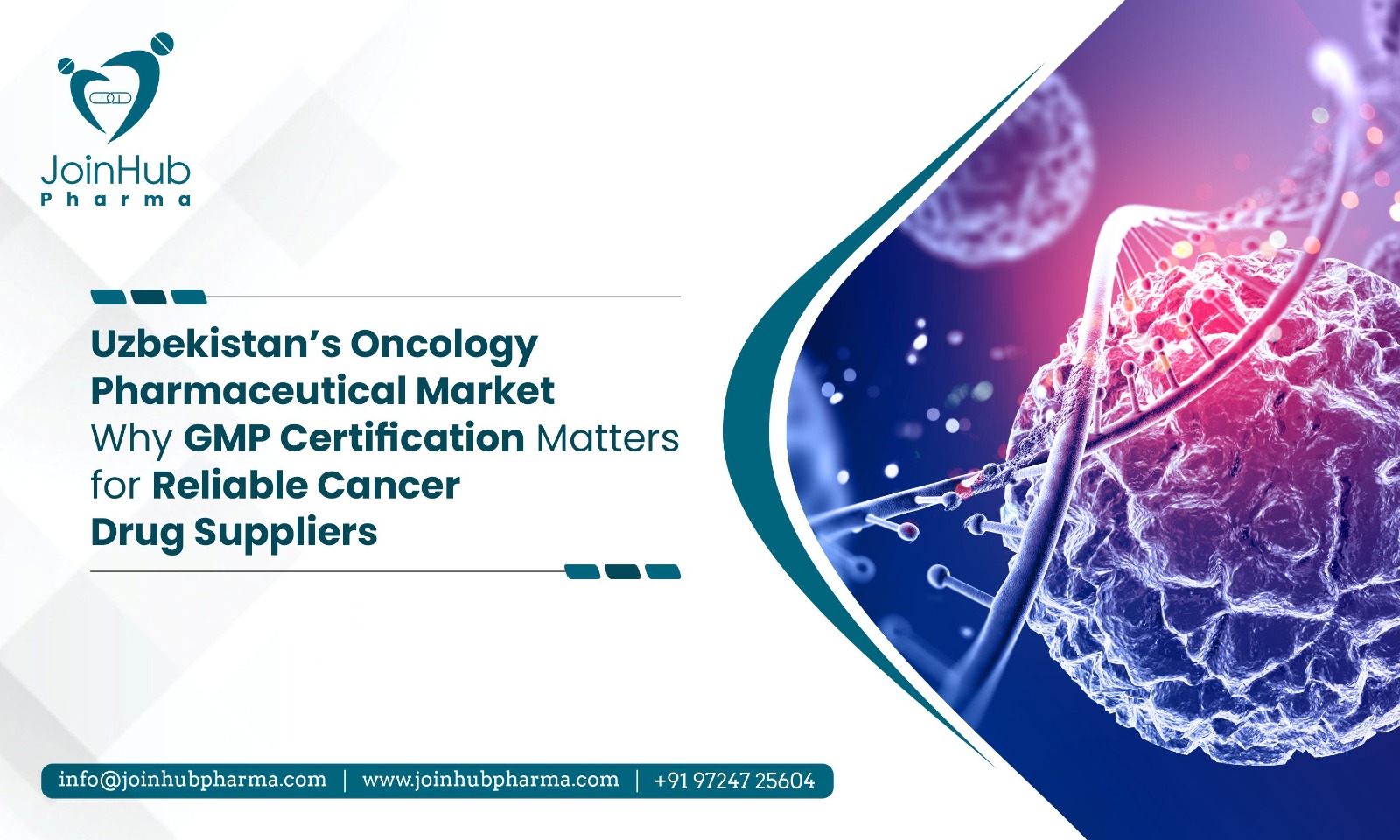
The oncology pharmaceutical market in Uzbekistan is expanding rapidly as the country strengthens its healthcare infrastructure and prioritizes access to high-quality cancer treatments. Rising cancer incidence, government initiatives to improve oncology care, and growing demand for affordable yet effective therapies have created significant opportunities for pharmaceutical suppliers. In this evolving landscape, the role of a GMP-certified oncology manufacturer has become critical. Good Manufacturing Practice (GMP) certification is no longer just a regulatory checkbox—it is a fundamental marker of reliability, safety, and consistent quality for cancer drugs supplied to Uzbekistan.
Understanding Uzbekistan’s Growing Oncology Needs
Cancer ranks among the leading causes of mortality in Uzbekistan, with increasing detection rates for breast, lung, colorectal, and hematological malignancies. The government has responded by investing in specialized oncology centers, expanding national screening programs, and working to ensure a stable supply of essential anticancer medicines. Local production capacity remains limited for complex oncology formulations, creating strong dependence on international suppliers who can meet stringent quality requirements.
Hospitals, distributors, and public procurement agencies in Uzbekistan increasingly prefer partners who demonstrate compliance with internationally recognized standards. This preference stems from the high-risk nature of cancer therapies—products that must deliver precise potency, purity, and stability under demanding conditions. A GMP-certified oncology manufacturer such as JoinHub Pharma provides the assurance that every batch has been produced under controlled, audited conditions designed to minimize contamination, ensure batch-to-batch consistency, and protect patient safety.
Why GMP Certification Is Non-Negotiable for Cancer Drug Suppliers
GMP certification, whether from national authorities, the World Health Organization (WHO), or other recognized bodies, verifies that a manufacturing facility follows rigorous processes covering facility design, equipment qualification, personnel training, documentation, quality control testing, and deviation management. For oncology products—many of which are cytotoxic, highly potent, or require sterile processing—these controls are especially important.
Without GMP oversight, the risks multiply: inconsistent active pharmaceutical ingredient (API) content, residual solvents, microbial contamination, or cross-contamination with other products. In oncology, even small quality deviations can compromise efficacy or introduce serious safety concerns for immunocompromised patients. Uzbek regulators and healthcare providers therefore prioritize suppliers who hold current GMP certificates and can provide supporting documentation such as Certificates of Analysis, stability data, and audit reports.
Partnering with a GMP-certified oncology manufacturer also simplifies regulatory submissions and tender participation in Uzbekistan. Many public and private tenders now explicitly require proof of GMP compliance, along with evidence of successful inspections. This requirement filters out lower-quality sources and favors manufacturers who invest continuously in quality systems.
Cancer drug manufacturers in India have emerged as important contributors to the global oncology supply chain, offering a combination of technical expertise, cost efficiency, and adherence to international quality benchmarks.
Key Benefits of Choosing a GMP-Certified Partner for the Uzbek Market
Selecting a reliable GMP-certified oncology manufacturer delivers multiple advantages beyond basic compliance:
- Consistent product quality – Validated processes and in-process controls reduce the chance of batch failures or recalls.
- Supply chain reliability – GMP facilities typically maintain robust quality systems that support predictable production schedules and on-time deliveries.
- Regulatory acceptance – Documentation from GMP-compliant sites is more readily accepted by Uzbek authorities and international organizations supporting healthcare programs.
- Patient safety focus – Strict environmental monitoring, containment strategies for potent compounds, and validated cleaning procedures protect both product integrity and manufacturing personnel.
- Long-term partnership potential – Manufacturers with strong GMP track records are better positioned to support technology transfers, new product registrations, and capacity expansions as Uzbekistan’s oncology needs grow.
These benefits are particularly relevant as Uzbekistan continues to modernize its pharmaceutical regulatory framework and align more closely with international standards.
Semantic Considerations for Market Success
Beyond the core keyword GMP-certified oncology manufacturer, related terms such as WHO-GMP certified cancer drug supplier, reliable oncology API manufacturer, quality-assured anticancer medicines, sterile injectable oncology production, and certified cytotoxic drug manufacturer frequently appear in professional discussions and procurement language. Using these semantic variations naturally throughout content and communications helps reinforce expertise while remaining useful to decision-makers searching for trusted partners.
Manufacturers that actively maintain and update their GMP status—through regular self-inspections, third-party audits, and continuous improvement programs—signal seriousness about quality. In competitive tenders, the ability to present recent inspection reports, CAPA (Corrective and Preventive Action) records, and validated analytical methods often distinguishes successful suppliers.
Practical Steps for Uzbek Buyers Evaluating Suppliers
Healthcare institutions and distributors in Uzbekistan can strengthen their sourcing process by following a structured evaluation approach:
- Request current GMP certificates and the scope of certification (specific product lines or dosage forms).
- Review recent audit findings and the manufacturer’s response history.
- Assess experience with similar markets and track record of successful registrations or supplies.
- Confirm capacity for the required volumes and ability to provide technical support during product registration.
- Evaluate packaging, labeling flexibility, and cold-chain or specialized logistics capabilities where needed.
This diligence reduces the risk of supply interruptions and quality-related issues that could affect patient care.
Looking Ahead: Quality as a Competitive Advantage
As Uzbekistan’s oncology pharmaceutical market matures, the distinction between ordinary suppliers and GMP-certified oncology manufacturer partners will become even sharper. Government efforts to improve cancer outcomes, combined with rising expectations from clinicians and patients, will continue to elevate the importance of proven quality systems. Manufacturers that invest in advanced containment technologies, robust analytical capabilities, and transparent quality culture are best positioned to support this growth.
For stakeholders across the value chain—from procurement officers to hospital pharmacists—the choice of supplier ultimately affects treatment reliability. Prioritizing GMP certification is one of the most effective ways to safeguard that reliability.
JoinHub Pharma: A Trusted Partner in Oncology Supply
JoinHub Pharma focuses on quality-driven pharmaceutical manufacturing under WHO-GMP standards. The company specializes in the development, manufacturing, and supply of high-quality generic medicines across a wide range of therapeutic areas and dosage forms, including tablets, capsules, injectables, and more. With a strong emphasis on GMP-compliant manufacturing and global regulatory standards, the company serves healthcare systems that demand reliability and transparency. JoinHub Pharma combines technical expertise in complex formulations with a commitment to consistent quality, making it a suitable partner for markets such as Uzbekistan that prioritize patient safety and supply security. The company’s approach centers on rigorous quality systems, responsive commercial support, and a clear understanding of the documentation and compliance requirements needed by distributors and institutions in Central Asia. Contact JoinHub Pharma today at info@joinhubpharma.com to discuss the requirement.
Frequently Asked Questions
What does GMP certification mean for an oncology manufacturer?
GMP certification confirms that the manufacturer follows internationally recognized standards for production, quality control, documentation, and facility management. For oncology products, it provides assurance that potent and sterile medicines are produced under controlled conditions that protect product quality and patient safety.
Why is GMP particularly important for cancer drugs supplied to Uzbekistan?
Cancer therapies are high-risk products used by vulnerable patients. Uzbek healthcare providers and regulators increasingly require GMP proof to ensure consistent quality, reduce contamination risks, and meet tender eligibility criteria.
How can buyers verify a manufacturer’s GMP status?
Request the current certificate, confirm the issuing authority and validity period, and ask for recent inspection summaries or audit reports. Reputable manufacturers readily provide this documentation.
Does GMP certification guarantee product efficacy?
GMP focuses on manufacturing quality and consistency. Efficacy is established through clinical data and regulatory approval of the specific product. However, GMP compliance supports the reliable delivery of a product that meets its approved specifications.
What role do Indian manufacturers play in the oncology supply chain?
Many established Indian companies hold WHO-GMP and other international certifications and supply a wide range of oncology formulations and APIs to global markets, including Central Asia, often combining technical capability with competitive pricing.
How does partnering with a GMP-certified supplier benefit long-term supply security?
GMP systems emphasize process control, change management, and continuous improvement, which help manufacturers maintain stable output and respond effectively to regulatory or market changes.
Choosing a GMP-certified oncology manufacturer remains one of the strongest safeguards for quality and reliability in Uzbekistan’s expanding oncology pharmaceutical market. By focusing on verified manufacturing standards, buyers can support better patient outcomes while building sustainable supply partnerships.