The pharmaceutical industry in Ghana is expanding rapidly due to increasing healthcare demand, government health initiatives, and the rising need for affordable medicines. Among the most essential healthcare products are injectable medicines, which are widely used in hospitals, clinics, emergency care, and specialty treatments. As a result, many Ghanaian importers, distributors, and healthcare institutions are partnering with an injection manufacturer in India to source high-quality and cost-effective injectable products.
India has become one of the world’s leading pharmaceutical manufacturing hubs, supplying medicines to over 200 countries. With WHO-GMP-certified facilities, advanced technology, and competitive pricing, Indian pharmaceutical manufacturers are playing a crucial role in Ghana’s healthcare supply chain.
This guide explains why Ghana imports injections from India, the import process, regulatory requirements, product categories, and how to choose the right manufacturing partner.
Why Ghana Imports Injectable Medicines from India
Ghana’s pharmaceutical market relies heavily on imported medicines because local production capacity is still limited. Injectable products require advanced sterile manufacturing facilities, strict quality control systems, and international certifications. Indian manufacturers are well-positioned to meet these requirements.
Here are the major reasons Ghanaian importers prefer an injection manufacturer in India:
1. Affordable Pricing
Indian pharmaceutical companies offer competitive prices without compromising quality. This allows Ghanaian distributors and hospitals to procure medicines in bulk while maintaining profitability and affordability for patients.
2. WHO-GMP Certified Manufacturing
Most reputed Indian injectable manufacturers operate WHO-GMP-approved plants. These facilities follow international standards for sterile production, packaging, and quality testing.
3. Wide Product Range
Indian companies manufacture a large portfolio of injectable medicines, including:
- Antibiotic injections
- Pain management injections
- Anti-malarial injections
- Hormonal injections
- Vitamin injections
- Oncology injectables
- Critical care injections
- Vaccines and biologics
4. Strong Export Experience
India is one of the largest pharmaceutical exporters globally. Experienced exporters understand documentation, regulatory compliance, shipping procedures, and international packaging standards required for Ghana.
5. Reliable Supply Chain
Leading Indian manufacturers ensure an uninterrupted supply, stable production capacity, and timely deliveries, all of which are essential for Ghana’s healthcare sector.
Growing Demand for Injectable Medicines in Ghana
The demand for injections in Ghana is increasing because of:
- Rising population
- Expansion of hospitals and clinics
- Increasing chronic diseases
- Growth in emergency healthcare services
- Government healthcare programs
- Rising awareness about advanced treatments
Injectable medicines are preferred in many clinical situations because they provide faster therapeutic action and better absorption compared to oral medicines.
Some of the most demanded injectable segments in Ghana include:
| Injectable Category | Common Usage |
| Antibiotic Injections | Bacterial infections |
| Anti-malarial Injections | Malaria treatment |
| IV Fluids | Hydration and emergency care |
| Vitamin Injections | Nutritional deficiency |
| Analgesic Injections | Pain management |
| Anti-diabetic Injectables | Diabetes treatment |
| Oncology Injectables | Cancer treatment |
Regulatory Requirements for Importing Injections into Ghana
Importing injectable medicines into Ghana requires compliance with regulations established by the Ghana Food and Drugs Authority (FDA Ghana).
Before partnering with an injection manufacturer in India, importers should understand the following requirements:
Product Registration
All pharmaceutical products must be registered with the FDA in Ghana before commercialization. The registration process generally includes:
- Product dossier submission
- Manufacturing license verification
- Stability data
- Certificate of Pharmaceutical Product (COPP)
- Label approval
- Quality specifications
WHO-GMP Certification
The manufacturing facility should have WHO-GMP certification to ensure international quality standards.
Documentation Required
Common documents required include:
- Commercial Invoice
- Packing List
- Bill of Lading/Airway Bill
- Certificate of Origin
- Product COA (Certificate of Analysis)
- Manufacturing License
- Free Sale Certificate
Labeling Compliance
Labels should comply with Ghanaian pharmaceutical regulations and include:
- Brand name
- Generic name
- Batch number
- Manufacturing and expiry date
- Storage conditions
- Manufacturer details
How to Choose the Right Injection Manufacturer in India
Selecting the right manufacturing partner is critical for long-term business success. Ghanaian importers should evaluate manufacturers carefully.
1. Check Certifications
Ensure the company has certifications such as:
- WHO-GMP
- ISO Certification
- GLP Compliance
- EU-GMP (if applicable)
2. Evaluate Manufacturing Capacity
The manufacturer should have sufficient production capacity to handle bulk orders and maintain supply consistency.
3. Product Portfolio
Choose a company offering a wide range of injectables to simplify sourcing and reduce operational costs.
4. Quality Control Systems
Sterile injectable manufacturing requires advanced testing systems, including:
- Microbiological testing
- Sterility testing
- Stability testing
- Particle analysis
5. Export Experience
An experienced exporter understands Ghanaian import procedures and international logistics.
6. Packaging Standards
Export-quality packaging is important to maintain product integrity during transportation.
Benefits of Third-Party Injection Manufacturing
Many pharmaceutical distributors in Ghana prefer outsourcing production through third-party pharma manufacturing services. This business model offers multiple advantages.
Lower Investment
Importers do not need to invest in expensive manufacturing plants.
Faster Market Entry
Products can be launched quickly using existing manufacturing infrastructure.
Custom Branding
Companies can market injectable medicines under their own brand names.
Regulatory Support
Manufacturers often assist with documentation and registration processes.
Product Expansion
Businesses can expand their product portfolio without increasing operational complexity.
Types of Injectable Products Manufactured in India
Indian pharmaceutical companies manufacture injections in multiple dosage forms and packaging types.
Liquid Injections
Ready-to-use sterile liquid formulations.
Dry Powder Injections
Lyophilized products require reconstitution before use.
Ampoules
Single-dose sealed glass containers.
Vials
Widely used for antibiotics and critical care medicines.
Prefilled Syringes
Convenient and accurate dosing systems.
Infusion Products
Large-volume parenterals are used in hospitals and emergency care.
India’s Position in the Global Injectable Market
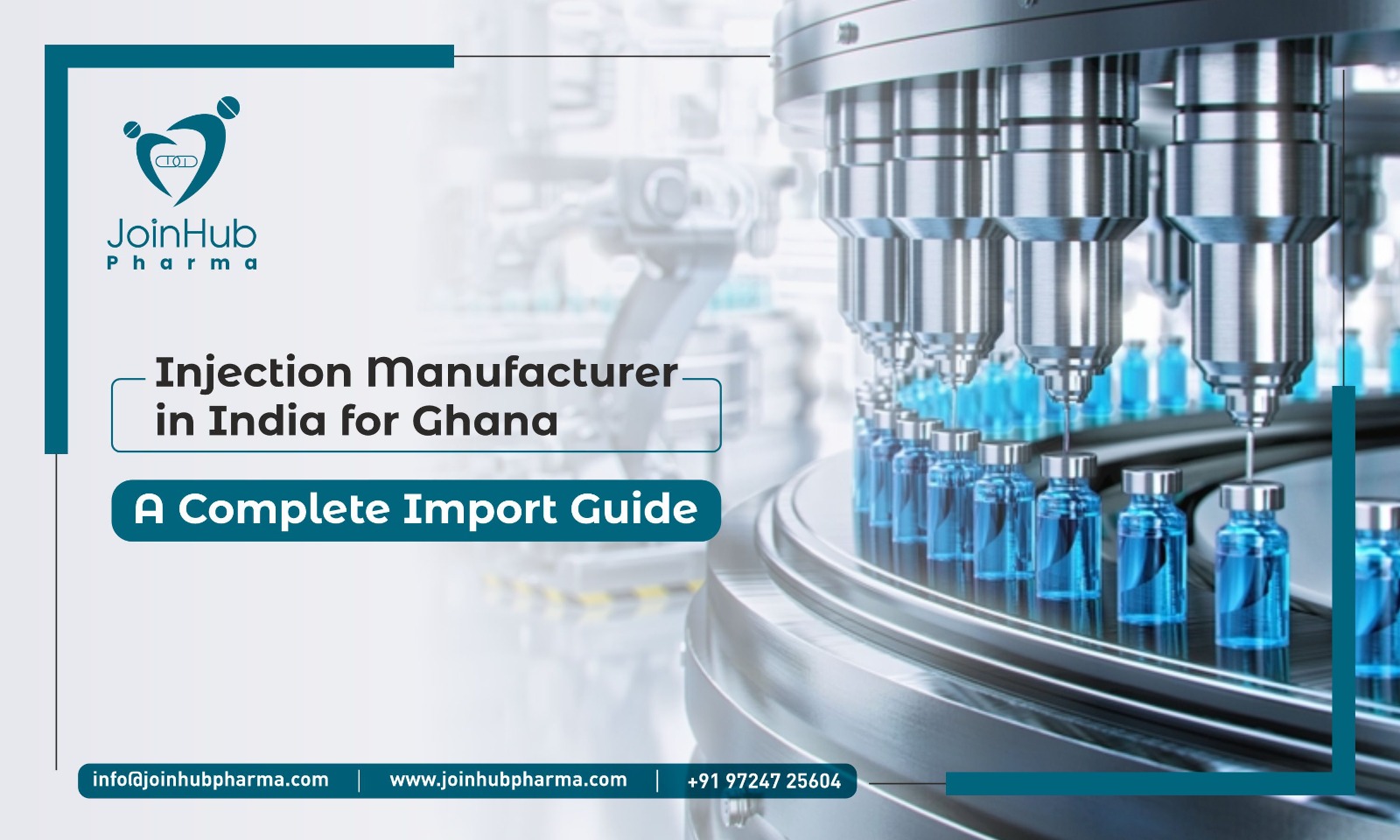
India has become a global leader in sterile injectable manufacturing due to technological advancements and regulatory compliance.
Many companies listed among the top 10 injectable companies in India export products to Africa, Asia, Europe, Latin America, and the Middle East.
Indian manufacturers invest heavily in:
- Advanced aseptic technology
- Automated filling systems
- High-speed packaging lines
- Research and development
- International regulatory approvals
This makes India a trusted sourcing destination for Ghanaian pharmaceutical businesses.
Challenges in Importing Injectable Medicines
Although importing from India offers major advantages, importers should also be aware of potential challenges.
Regulatory Delays
Product registration may take time if the documentation is incomplete.
Temperature-Sensitive Products
Certain injectables require cold chain transportation and storage.
Counterfeit Risks
Working only with certified and reputable manufacturers helps avoid substandard products.
Logistics and Shipping
Proper freight planning is essential to avoid delays and maintain product quality.
Why JoinHub Pharma is a Reliable Partner
JoinHub Pharma is committed to supplying high-quality pharmaceutical products to international markets, including Ghana. The company focuses on:
- WHO-GMP manufacturing standards
- Wide injectable product range
- Export-quality packaging
- Timely delivery
- Regulatory documentation support
- Competitive pricing
By partnering with a trusted injection manufacturer in India, Ghanaian importers can strengthen their pharmaceutical business while ensuring safe and effective healthcare products for patients. Contact JoinHub Pharma today at info@joinhubpharma.com to discuss the requirement.
FAQs
Why is India a preferred source for injectable medicines in Ghana?
India offers high-quality pharmaceutical products, WHO-GMP-certified manufacturing, affordable pricing, and strong export expertise, making it a preferred sourcing destination for Ghanaian importers.
What certifications should I check before importing injections from India?
You should verify certifications such as WHO-GMP, ISO, GLP, and other international regulatory approvals.
Can Indian manufacturers provide private-label injectable products?
Yes, many Indian pharmaceutical companies offer third-party manufacturing and private labeling services for distributors and importers.
What documents are required for importing injections into Ghana?
Key documents include a commercial invoice, packing list, certificate of origin, manufacturing license, certificate of analysis, and FDA registration documents.
Are Indian injectable medicines affordable?
Yes, Indian manufacturers provide cost-effective injectable products while maintaining international quality standards.
What injectable products are most commonly imported into Ghana?
Commonly imported products include antibiotic injections, anti-malarial injections, vitamin injections, IV fluids, analgesics, and critical care injectables.
How can I select the best injection manufacturer in India?
Evaluate certifications, manufacturing capacity, export experience, product range, quality systems, and packaging standards before finalizing a supplier.
Does JoinHub Pharma export injectable medicines to African countries?
Yes, JoinHub Pharma supplies pharmaceutical products to several international markets, including African countries like Ghana.